Healthcare & Clinical Research

Connect protocols, trial data, and publications into one knowledge graph. Surface safety signals faster. Full source traceability.

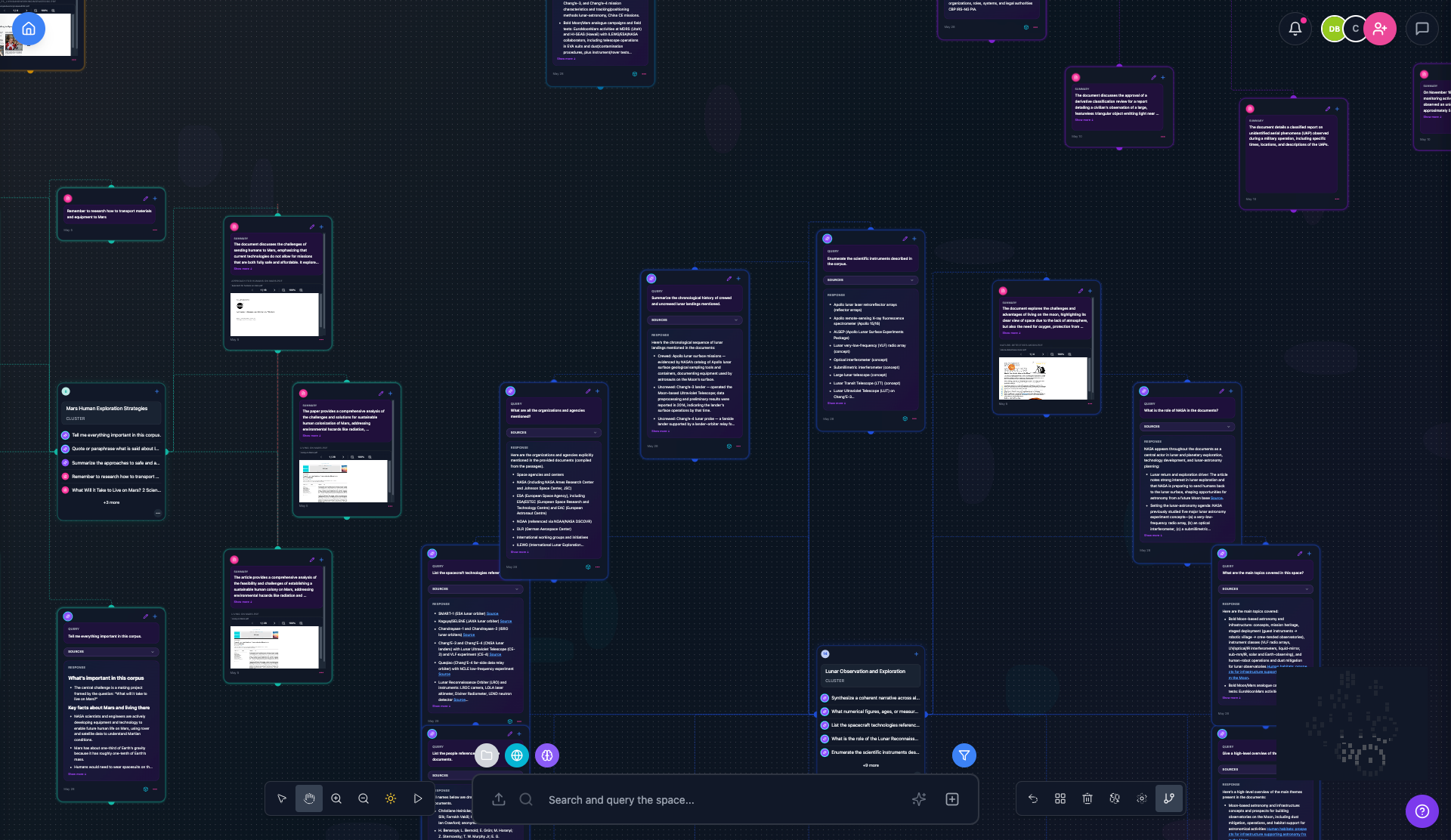
Anatypical platform interface showing knowledge graph and document management

Why do research institutions miss connections in their own data?

Clinical research generates enormous volumes of documents across disconnected systems — protocols, amendments, IRB submissions, trial data, lab notebooks, and publications. No existing tool maps the relationships between these documents automatically. Connections that matter — like the link between a protocol amendment and a subsequent adverse event — are discovered manually, often months after the fact.

A safety signal appears in trial data. The root cause is a protocol amendment made eight months earlier — but the amendment was reviewed by a different team, stored in a different system, and never formally linked to downstream outcomes. The connection is obvious in retrospect, but no tool surfaced it proactively. In clinical research, latent connections aren't just inefficiencies — they're patient safety issues.

Meanwhile, a researcher spends two weeks reviewing literature for a grant proposal, unaware that a colleague in a different lab published a systematic review covering 60% of the same ground last year. And methods that took one team months to optimize are re-derived from scratch in the next lab because experimental notes and negative results aren't discoverable.

How does Anatypical solve this for research teams?

Anatypical ingests protocols, amendments, IRB submissions, trial data, lab notebooks, publications, and internal memos — then maps entity relationships across all of them. A protocol amendment is automatically linked to the trial it governs, the endpoints it affects, and downstream safety data. Every answer includes a full source trail via Glass Box for regulatory submissions.

Cross-system knowledge graph

Connections exist in the graph from the moment documents are ingested, not after a manual review. When a researcher queries "What safety signals are associated with this compound?", they get results that span protocols, trial data, and published literature — connected automatically.

Glass Box traceability for regulatory confidence

Every claim traces back through specific documents and specific passages. For regulatory submissions, this is the difference between a defensible filing and one that triggers an audit finding.

Negative result preservation

Methods documentation, failed experiments, and calibration notes are first-class objects in the knowledge graph. When a researcher queries "Has anyone tried this method on this sample type?", the system returns both published and unpublished results, including documented failures.

Open ontology that learns from your data

The platform doesn't require a predefined schema. The ontology learns from your content — recognizing entities, relationships, and categories specific to your field. A cardiology group and a genomics lab produce fundamentally different documents, but the platform adapts to both.

What does this look like in practice?

A data safety monitoring board reviews interim trial data and flags an unexpected adverse event pattern. A clinical research associate queries Anatypical: "Are there any protocol amendments in the last 12 months that affected this endpoint?"

The system surfaces a protocol amendment from nine months earlier that modified the dosing schedule for a subset of participants — and links it to three subsequent adverse event reports in the same cohort. The connection had not been identified because the amendment and the AE reports were stored in different systems.

The DSMB now has the full picture within minutes, not weeks.

Why don't current tools solve this?

PubMed, Scopus, and internal document management systems serve different purposes — and none connect the dots between published literature, regulatory submissions, and internal lab notebooks. Researchers run parallel searches across fragmented systems, manually assembling context that should be connected by default. Anatypical treats every document an institution produces — published or not — as part of a single queryable knowledge graph.

Frequently asked questions

See it work with your data.

We'll demonstrate how Anatypical connects protocols, publications, and internal research — using document types you'll recognize.